
Demand for restructuring the geography and regions to better accommodate people’s access to state apparatus is not new in Nepal. Nepal, after the unification of smaller principalities, occurred to shape a modern Nepal during the 17th century, was divided into 20 Hill, 9 Madhesh and 3 Inner Madhesh districts during Rana dynasty. Later in 1961, Nepal was again restructured in 75 districts and 14 zones. And in 5 development regions in 1980.
Before the promulgation of the new constitution on 20 September 2015, Nepal represented 75 districts, over 200 municipalities and over 3,500 Village Development Committees (VDCs). The new constitution has restructured the country in 7 provinces and 753 local levels. To accommodate federalism, as the principal demands of Madhesh Movement, 2007, the constitution has accepted the discrimination and exploitation emerged from the feudal, centralised and unitary system and thus has owned federal republic governance system.
The new federal governance system consists of legislative, executive and judiciary. The House of Representatives (HoR) and National Assembly (NA) represent Federal Legislature. A Provincial Assembly at the provincial level and a Village Assembly and a Town Assembly at the local level refer to provincial and local level legislatures. Similarly, a Council of Ministers, led by the Prime Minister, represents federal executive, A Provincial Council of Ministers, headed by the Chief Minister, leads the provincial executive. The Chair of the Village Council and the Mayor of the Town Council lead local level executives. Federal government leads the overall judiciary. Accordingly, a Supreme Court at the federal level, a High Court at the provincial level and a District Court at each of the districts represent the judicial system.
Constitutionally, the federal government can establish Special, Protected and Autonomous Regions for social, cultural protection and economic development. The federal legislature consists of House of Representatives and National Assembly. 275 members in the House of Representatives (HoR) consist of 165 members by First-Past-The-Post (FPTP) and 110 members from Proportional Representation (PR). Similarly, to select 59 members of the National Assembly (NA), 56 members are elected by an Electoral College, consisting of 56 members from Provincial Members and Local Levels’ Chair/Vice-Chair/Mayor/Deputy-Mayors, and rest three members will be nominated by the President. Nepal’s
The Chief Minister heads the provincial Council of Ministers, and the Provincial Assembly is made of members from FPTP and PR systems. Similar to the province, the local level also consists of executive and legislature.
The new Constitution, 2015, distributes constitutional powers between federal, provincial and local level governments. These powers are divided as exclusive, concurrent and reserved where federal, provinces and local levels are provided with exclusive (or self-rule) powers. Coordination and partnership are required between federal, province and local level to exercise concurrent (or shared-rule) powers. Reserved powers are granted to the federal government only. Federal, provincial and local level governments can also make and enforce rules and laws related to finance, fiscal budget, policy and plans in their jurisdiction. Constitutionally, however, none of the provincial law should contradict with federal law, and none of the local level law should challenge the respective provincial law, or it gets invalidated to the extent it contradicts.
Constitutional provisions are integrated to promote intergovernmental relations and to resolve potential disputes between them. Constitutionally, one province should provide equal protection and privileges to the people of other provinces. An Inter-Provincial Council is provisioned to a resolved potential political dispute between federal and provincial government or between provinces.
There shall be no discrimination or obstruction, tax, fee, or tariff to be imposed on the transportation of goods or extension of services between one province or local level to the other. The essence of federalism is on laying the foundation of equal access and exercise state-provided rights and services. However, some social, economic and political causes limit the efforts of many Nepalese, and in particular, the minority and marginalised communities, to integrate into the mainstream. It is crucial that new governance system adopt the principle of inclusivity and equity to ensure whole development and meaningful participation of such excluded groups.
National Census 2011 counts 26,494,504 as the total population in Nepal. This population is divided into 125 castes/ethnicities, 123 linguistic groups, and about 2 percent of the total population is affected by some kind of disability. Among them, only 18 caste/ethnic groups represent more than 1 percent each, and 20 caste/ethnic groups count between 230,000 and 100,000. 15 groups cover between 50,000 to 100,000, 38 groups represent 5,000 to 50,000 and 34 groups are under 5,000 populations.
Nepal is beautiful because of these differences in geography, caste/ethnicity and their cultures and traditions. But, many reasons put a limited number of caste/ethnicity, region, class and community in the minority and marginalised status and so the country has to face multiple challenges. Considering this, the new constitution, 2015, has integrated some measures to uphold the rights of the minority and marginalised (people and groups).
Multi-ethnicity, multi-lingual, multi-religious, multi-cultural and geographic diversity is accepted in the Preamble of the constitution. Equally, a promise to establish an equitable society on the basis of proportional inclusion and participatory principles is made to end class, caste, regional, linguistic, religious, gender and all other forms of racial untouchability.
Nepal’s Constitution, 2015, refers to ‘minority’ to those caste/ethnic, linguistic and religious group experiencing discrimination and exploitation and have a population less than the determined percentage. Similarly, the term ‘marginalised’ refers to the community who has been politically, economically and socially left behind, and excluded from services and benefits due to discrimination, exploitation and geographic remoteness.
The constitution ensures fundamental rights that include right to decent life, liberty, equality, religious freedom, education, against untouchability and discrimination, against exploitation, language and culture, special and equal rights to women, children, equal, special and compensatory rights to Dalits, and social justice. The right to equality lists measures to end discrimination against religious, race, caste/ethnicity, sex, physical and health status, marital status, pregnancy, economic status, language or region. And adopts inclusive principle to promote the participation of exploited and discriminated groups and class to the status apparatus.
The status is encouraged to provide preferences to the economically weaker section of the sexual, regional and communities while providing social security and social justice. Pluralistic and equality-based equitable society, inclusive representation and protection of identity is guaranteed to promote political inclusion at the federal, province and local level. Accordingly, the political parties, while filing the candidacy under the proportional representation (PR) in the House of Representatives (HoR), must represent women, Dalit, indigenous nationality, Khas Arya, Madheshi, Tharu, Muslim, backward regions on the basis of their respective population.
The House of Representatives (HoR) must have one-third of women, and inclusive participation is ensured in the National Assembly as well. The Provincial Assembly has 60 percent members who are directly elected and remaining 40 percent based on proportional representation (PR) system. At the local level, four women members and two members from Dalit or minority should be elected among the members of each Village or Town Assembly. Political parties are required to reflect the inclusive representation of the country in the formation, registration, operation as well as in their executive committee.
The constitution can provision for various commissions in response to the need of specific sex, caste/ethnicity, class and community. Accordingly, National Women Commission, National Dalit Commission, National Inclusion Commission, Indigenous Nationalities Commission, Madheshi Commission, Tharu Commission, Muslim Commission, Language Commission, and National Human Rights Commission are provisioned.
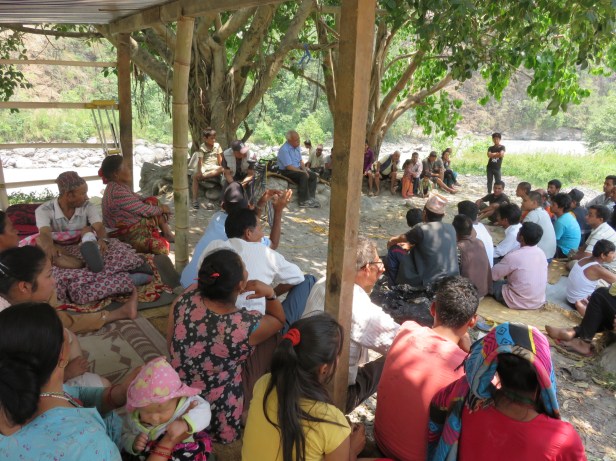
There is a need to close the widespread information gap among the citizens about the constitutional achievements and even own’s right achieved after continuous and numerous struggles and movements. This is more so as the federal form of governance system is new to Nepal and so mass awareness and broader discussion is yet to reach the public. Lack of information, coordination and participation, whether during constitution writing or even about the useful and inclusive provisions in the new constitution, tend to raise blurred and partial understanding, and that may lead to conflicts. And so, the stakeholders need to adopt a robust strategy to inform, participate and increase the buy-in of ordinary citizens in the federalization process.
Finally, there are hopes that the meaningful and continuous efforts of all Nepalese to the inclusive, transparent and accountable implementation of the constitution and the federal system can guarantee a peaceful, prosperous and sustainable future of all.
(This is an extract from a video documentary that I conceptualised and directed in January 2018 and can be viewed at https://www.youtube.com/watch?v=BuYkYoejSTo)
 Rakesh Karna