
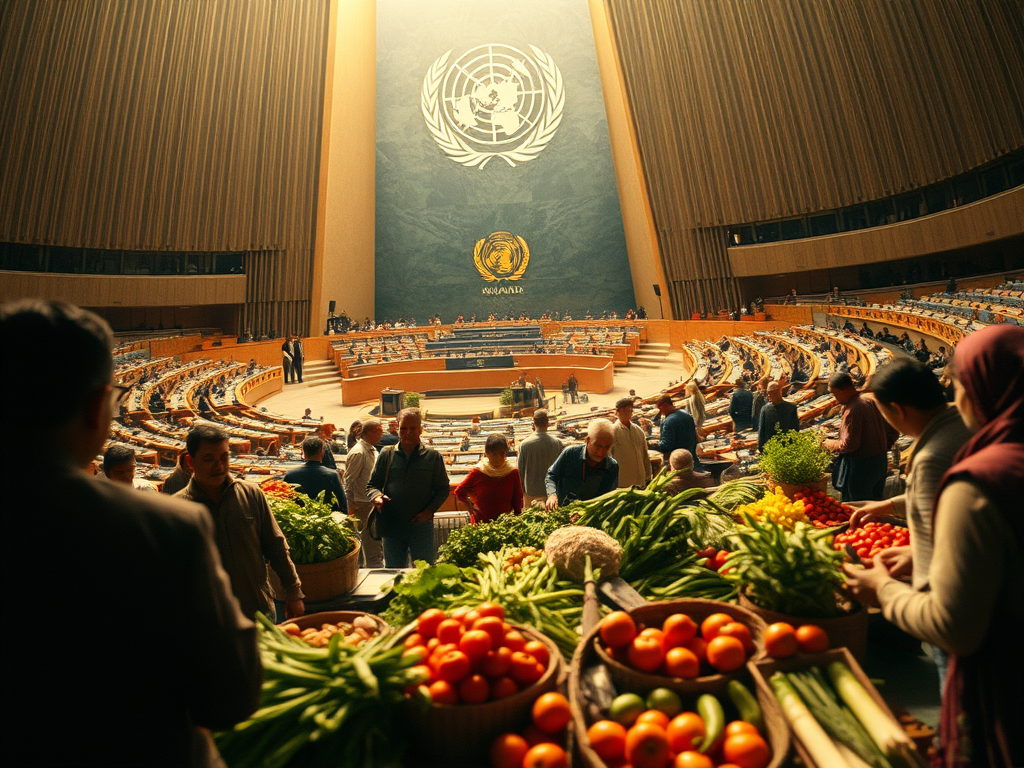
Nepal stands at a crucial crossroads in its development journey. As the world grapples with unprecedented challenges, from climate change to economic instability, Nepal finds itself navigating a complex landscape of global initiatives and national aspirations. The recent adoption of the United Nations Pact for the Future has cast a new light on the country’s path forward, highlighting both the hurdles it faces and the opportunities that lie ahead.
A Global Call to Action
The Pact for the Future, adopted by the United Nations in response to mounting global challenges, represents a renewed commitment to international cooperation and sustainable development. This ambitious agreement comes at a time when the world faces profound transformations and rising catastrophic risks, necessitating a strengthened multilateral system to keep pace with rapid changes and accelerate progress on the Sustainable Development Goals (SDGs).
For Nepal, a country striving to graduate from Least Developed Country status by 2026 while simultaneously working towards the 2030 Agenda, the Pact offers both a roadmap and a challenge. It calls for increased support and financing for developing countries, emphasizes bridging digital divides, and focuses on building resilience to climate change impacts – all areas of critical importance to Nepal’s future.
Nepal’s SDG Progress: A Mixed Picture
Nepal’s commitment to the SDGs has been evident since their adoption in 2015. The country has made notable progress, achieving 58.6% of its mid-term (2022) targets and 41.7% of its long-term (2030) targets. This progress is reflected across all levels of government, with Nepal’s federal structure of 7 provinces and 753 local governments playing crucial roles in SDG implementation and localization.
However, the journey has not been without its challenges. Nepal needs over US$163 billion to meet the SDGs from 2024 to 2030: about 11 percent of the national GDP for the same period. This highlights the urgent need for innovative funding solutions. The country also grapples with data and monitoring gaps, lacking a robust progress tracking system. Climate change risks pose a significant threat to development gains, while persistent poverty (i.e. 20% of the Nepalese population live in absolute poverty) and inequality (of various forms including caste, class, and regions), continue to hinder progress.
The Pact for the Future: New Horizons and Hurdles
The Pact for the Future presents both opportunities and challenges for Nepal. On the one hand, it promises increased international support and financing for sustainable development, access to capacity building and technology transfer in critical areas like digital technologies and climate resilience, and opportunities to engage in global governance reforms. These align well with Nepal’s development needs and could provide much-needed support for the country’s SDG efforts.
On the other hand, implementing the Pact’s ambitious commitments will require overcoming significant hurdles. Nepal must mobilize substantial financial resources, build institutional and human capacity to leverage new technologies and balance development needs with environmental sustainability goals. The costs associated with transitioning to more sustainable and resilient infrastructure and systems are considerable, particularly for a country already facing economic challenges.
A Multi-Stakeholder Approach
One of the key emphases of the Pact for the Future is the need for a multi-stakeholder approach to sustainable development. This resonates strongly with Nepal’s context, where collaboration between various actors is crucial for progress.
The national government bears primary responsibility for implementing commitments and policies. However, the private sector’s role in driving innovation, investment, and partnerships, particularly in areas like digital technologies, cannot be overstated. Civil society organizations play a vital part in advocacy, community engagement, and holding other actors accountable.
Academia and research institutions are essential for providing evidence and analysis to inform policies, while international organizations offer technical assistance, financing, and coordination support. Importantly, the Pact emphasizes the active participation of youth in decision-making and implementation of future-oriented policies – a critical consideration for Nepal, with its large young population.
Charting the Path Forward
As Nepal prepares to leverage the opportunities presented by the Pact for the Future, several key areas demand attention:
- Strengthening institutional capacity: Enhancing governance frameworks, technological capabilities, and innovation systems is crucial for effectively implementing the Pact’s commitments.
- Resource mobilization: Nepal must work on securing both domestic and international funding, leveraging partnerships with financial institutions, and encouraging private sector investment in sustainable development projects.
- Digital transformation: Investing in digital infrastructure, improving connectivity, and promoting digital literacy are essential for bridging the digital divide and fostering inclusive economic growth.
- Inclusive development: Policies that address the needs of marginalized communities, promote gender equality, and empower youth are vital for ensuring no one is left behind.
- Climate action and environmental sustainability: Given Nepal’s vulnerability to climate change, prioritizing climate resilience and sustainable resource management is non-negotiable.
- Multilateral cooperation: Active engagement in international forums and strengthening ties with global partners can help Nepal gain support for its development agenda and contribute to shaping global policies.
A Balancing Act
Nepal’s journey towards sustainable development, framed by the SDGs and now the Pact for the Future, is a delicate balancing act. The country must juggle immediate development needs with long-term sustainability goals, navigate global commitments while addressing local realities, and mobilize resources while ensuring equitable distribution of benefits.
Yet, amidst these challenges lie opportunities for transformation. By strategically aligning its national priorities with global initiatives, fostering innovative partnerships, and leveraging its unique strengths – including its rich biodiversity, cultural heritage, and the resilience of its people – Nepal can chart a path toward a sustainable and prosperous future.
As the world watches and supports Nepal’s efforts, the country’s journey offers valuable lessons in the global quest for sustainable development. In the face of daunting challenges, Nepal’s commitment to progress and its ability to adapt and innovate will be key to realizing the promise of a better future for all its citizens.
(A translated version of this article in the Nepali language is published on Sept 25, 2024 at https://www.onlinekhabar.com/2024/09/1544713/global-agreement-on-sustainable-development-and-nepals-roadmap?fbclid=IwY2xjawFhxiRleHRuA2FlbQIxMQABHb4ZN4aQ7mqhtX92eqsBmC0A0LXr-WgNsoGy1VqdLqo498WrFYDIbHCqKA_aem_CofEm8qBPLDFDewxKNo6Bg)
 Rakesh Karna