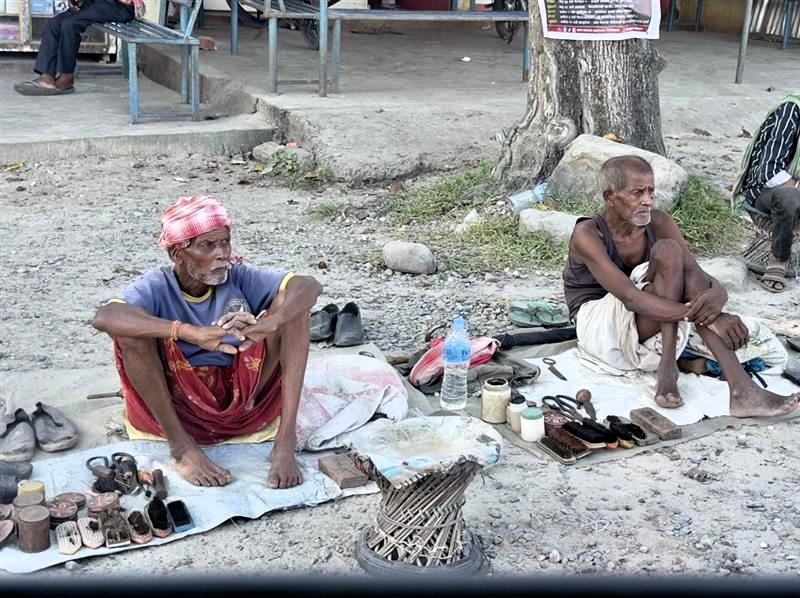
Nepal has lifted 9 million people out of poverty in 12 years, yet the richest tenth earn over three times what the poorest two-fifths earn combined, and in some western provinces one in three people remain poor. Development policies treat all poor as the same, but a Dalit woman in Karnali faces entirely different barriers than an upper-caste woman in Kathmandu- barriers that centralized, top-down programs consistently fail to address. The March 5, 2026 election offers a critical window for the incoming government to either continue approaches that deepened inequality even as poverty declined, or genuinely shift toward intersectional justice and community leadership. This article examines Nepal’s development paradox, why blanket policies fail the most marginalized, and what voters should demand from political parties- because without addressing structural inequality, the gains of the past 15 years will erode.
As Nepal prepares for its federal election on March 5, 2026, political parties are campaigning with familiar promises- rapid growth, stability, and development for all. Yet beneath the campaign rhetoric lies a disquieting reality that no amount of political theater can obscure: Nepal has made genuine progress in reducing poverty, but this progress has been accompanied by deepening inequality, entrenched regional divides, and the systematic exclusion of the nation’s most marginalized citizens from development benefits. The incoming government will be judged not by whether it continues past approaches, but whether it finally confronts this paradox at the center of its development agenda.
The paradox: economic growth without shared prosperity
The numbers appear encouraging at first glance. Nepal’s poverty rate has fallen dramatically over the past 15 years. Using the Nepal Living Standards Survey IV (NLSS-IV) methodology conducted in 2022-23, 20.27 percent of Nepalis- approximately one in five- live below the poverty line, down from 25.16 percent in 2010-11. (1) In absolute terms, approximately 9 million people have escaped poverty in just 12 years.
Multidimensional poverty- measuring deprivation across health, education, and living standards simultaneously- has collapsed from 58.3 percent of the population in 2006 to just 16.4 percent by 2022. (2) Infrastructure improvements tell the same story: electricity deprivation among the poor fell from 40.4 percent to 1.9 percent; drinking water deprivation dropped from 16.3 percent to 1.2 percent.
Yet these gains mask a deeply troubling hidden story. Between 2015 and 2016, when Nepal experienced the earthquake and India-Nepal border blockade, poverty surged from 20.6 percent to 27 percent, pushing nearly 2 million people back into poverty and reducing GDP growth to 0.4 percent. This reveals fundamental vulnerability: a one percent increase in youth unemployment reduces South Asian GDP per capita growth by 0.20 percent on average, reaching 0.30 percent when unemployment exceeds 17 percent. (3)
More fundamentally, economic growth is not translating into shared prosperity. Nepal’s GDP grew at an estimated 4.61 percent in fiscal year 2024-25, up from 3.7 percent in 2023-24. (4) Despite this growth, per capita gross national income increased modestly from USD 1,456 to USD 1,517- a mere USD 61 per person per year. Critically, inequality has stagnated or worsened even as poverty declined. The Gini coefficient- the standard measure of consumption inequality- sits at 0.30 and has not budged in years, indicating zero improvement in the distribution of wealth. Income inequality has worsened, with the income Gini coefficient rising from 0.49 in 2010-11 to 0.58 by 2019. (5) More alarmingly, the Palma ratio, which compares the income of the richest 10 percent to the poorest 40 percent, stands at 1.3:1, meaning Nepal’s wealthiest tenth earn over three times what the poorest two-fifths earn combined. When measured by wealth rather than income, the inequality is even more extreme: the richest 10 percent hold over 26 times the wealth of the poorest 40 percent. (6) The wealth Gini coefficient reaches 0.74, representing extreme wealth concentration.
This paradox reveals the fundamental nature of Nepal’s growth model. Remittances- workers’ earnings sent home from abroad- have exploded to 26.89 percent of Nepal’s GDP as of 2023, up from 22.82 percent in previous years. (7) While these money transfers have provided immediate relief to poor households and reduced income poverty, they have not addressed structural inequality. Ninety percent of remittances are consumed rather than invested in productive activities, creating a consumption boom that enriches those already well-off while leaving the poor in permanent economic dependence. The wealthy invest remittances in land, businesses, and assets that generate future income. The poor consume them to survive. As the World Bank concluded in its 2025 Nepal Country Economic Memorandum, “while remittances have buoyed private consumption and reduced poverty, they have not translated into substantial job creation or productivity gains across key economic sectors.” (8)
The result is a country where household poverty declines but structural inequality deepens—a development model that cannot be called success.
The geography of exclusion: Same country, different destinies
This inequality crisis manifests most sharply in regional disparities that reveal Nepal is increasingly becoming a country with considerable internal divergence. The 2022-23 NLSS-IV paints a stark picture: Sudurpaschim Province faces the deepest poverty crisis, with a headcount rate of 34.16 percent- meaning that in Sudurpaschim, about one in three people is poor, compared to about one in five nationally. (1) In other words, poverty in Sudurpaschim is roughly half as high again as the national average. This western province, home to only 8.32 percent of Nepal’s population, accounts for 14.02 percent of the nation’s poor. It is an economic emergency masquerading as a provincial statistic.
Karnali Province remains trapped in persistent deprivation. With 26.69 percent income poverty, Karnali lags across nearly every development indicator. (4) While electricity access has improved to roughly 75 percent, it remains the most energy-insecure province compared to the near-universal coverage in Bagmati and Gandaki. Literacy stands at 62.7 percent versus the national average of 76.2 percent. Per capita GDP is approximately USD 1,089, the lowest in the country and significantly below the national figure. Manufacturing in Karnali remains trivially small, reflecting decades of deliberate underinvestment and the concentration of economic activity in Kathmandu.
Madhesh Province presents a particularly troubling paradox. With 22.53 percent poverty, it ranks third among provinces in income poverty rates. Yet this understates the crisis: Madhesh is home to 25.08 percent of Nepal’s total poor population- the highest absolute concentration in the country- despite representing only 20.97 percent of the national population. (1) More strikingly, latest MPI 2024 data shows Madhesh has the second-highest multidimensional poverty rate at 24.02 percent, indicating severe, compounded deprivations. (2) The Human Development Index (HDI) in Madhesh stands at 0.519, the lowest among all provinces. (9) Most troublingly, female financial inclusion in Madhesh shows the widest gender gap in the country, reflecting systematic economic marginalization. (11)
In contrast, Gandaki (11.88 percent) and Bagmati (12.59 percent) experience poverty rates less than half those of the poorest provinces. In fiscal year 2023-24, Gandaki achieved 4.6 percent economic growth while Karnali and Sudurpaschim recorded just 3.3 percent and 3.4 percent respectively. (4) This gap compounds into vast developmental chasms. Karnali and Sudurpaschim are caught in a trap: too poor to invest in development, too far behind to catch up, and too marginalized to demand government attention.
The exclusion trap: why blanket policies fail
Yet poverty and regional inequality statistics mask a deeper crisis: the systematic exclusion of Nepal’s most marginalized citizens from development benefits through centralized, one-size-fits-all policies that treat diverse populations as homogeneous.
Nepal has 142 caste and ethnic groups and 124 mother tongues. Yet development policies speak of “the poor,” “women,” or “marginalized communities” as if these were uniform categories. They are not. A Dalit woman in Karnali faces completely different barriers than an upper-caste woman in Kathmandu, even if both live in poverty. The Dalit woman may simultaneously experience caste-based social exclusion from water sources, gender-based wage discrimination, geographic isolation, land insecurity, and restricted mobility due to patriarchal norms- all reinforcing each other in ways that generic women’s empowerment programs cannot address. (15) (16)
Madhesi women face distinct barriers rooted in the intersection of geographic marginalization, linguistic discrimination (non-Nepali speakers are often excluded from government services and higher education), patrilocal marriage systems (where women move to husband’s family and lose natal support), land insecurity, and economic precarity. When skill development programs, microcredit schemes, or financial inclusion initiatives are designed in Kathmandu without accounting for these specific Madhesi contexts, they inevitably fail to reach or benefit Madhesi women. (14)
Similarly, affirmative action policies- while well-intentioned- have disproportionately benefited the “creamy layer” of privileged individuals from marginalized communities, a pattern rooted in the absence of transparent and horizontal mechanisms for democratic selection and accountability. Civil service quotas, scholarships, and credit programs reach urban, educated Dalits, Janajati, and Madhesi candidates far more readily than landless Dalits, subsistence farmers, or women with restricted mobility because beneficiary selection remains opaque and controlled by centralized bureaucracies with limited community participation.
Without transparent criteria, participatory beneficiary selection processes, or mechanisms ensuring that selection committees reflect the diversity of marginalized communities themselves, well-resourced individuals from privileged backgrounds within disadvantaged groups leverage their existing networks, education, and social capital to access opportunities. They navigate government offices, complete complex applications, and navigate bureaucratic processes more effectively than the poorest members of their own communities. Representation has nominally improved in civil service rosters and political parties- visible as diversity statistics- yet the gap between richest and poorest members of the same caste, ethnicity, or region has often widened precisely because opportunities flow to those already positioned to seize them, not to those most deprived.
Until affirmative action policies are accompanied by genuinely transparent, horizontally-designed, and community-accountable selection mechanisms- where beneficiary criteria are determined locally and openly, where selection committees include poor community members themselves, and where decisions are publicly documented and subject to community challenge- affirmative action will continue to deepen inequality within marginalized groups even as it improves nominal representation.
The cost of inaction: economic imperatives
The persistence of poverty and inequality imposes quantifiable economic costs that threaten Nepal’s development aspirations.
Nepal’s per capita income growth has been sluggish for decades. While the official per capita GNI reached USD 1,517 in fiscal year 2024-25, the growth rate remains modest- just USD 61 per capita per year. Historically, Nepal’s per capita income growth over the past 45 years has been the lowest in South Asia, averaging just 2 percent annually from 1970 to 2014, while regional growth averaged 4 percent. (6)
More recently, between 1996 and 2023, Nepal’s economy grew at an average annual real rate of just 4.2 percent, ranking sixth out of eight South Asian nations. This sluggish growth directly reflects persistent poverty and inequality. When over one-fifth of the population cannot afford education or skills development, they remain trapped in low-productivity agricultural sectors. When talented youth cannot find productive employment domestically, they migrate, permanently removing human capital from the economy. (10) When investors see a country where over one-fifth of the population lives just above the poverty line with minimal economic buffers and where inequality has stagnated, they withdraw, fearing instability.
This economic case for action is unambiguous: Nepal cannot achieve middle-income status while leaving one-fifth of its population in poverty, maintaining extreme inequality, and excluding marginalized groups from economic participation.
What voters should demand: three immediate shifts
As political parties campaign, voters, civil society, and media must demand concrete commitments to three fundamental shifts in development approach.
First: Intersectional, community-led targeting. Parties must commit to replacing blanket poverty reduction programs with approaches explicitly designed around the intersecting deprivations facing different groups of marginalized women and communities. This means centering the voices and leadership of Dalit women, Madhesi women, Janajati women, religious minorities, and non-Nepali speakers in program design and implementation- not as passive beneficiaries, but as decision-makers and leaders.
Second: Genuine locally-led development. Evidence from Nepal and globally shows that development outcomes improve substantially when local communities lead their own agendas. Ward-level participatory budgeting, community-driven social audits, and participatory planning in Madhesh and Koshi under the Provincial and Local Governance Support Programme have increased citizen input into budget decisions and improved targeting of funds to poor and marginalized settlements. (12) (13) Yet these remain exceptions. Parties must commit to making participatory, locally-led development the standard across all municipalities and ward levels, with real budget authority devolved to communities and unrestricted, multi-year funding for civil society organizations working in lagging regions. (17)
Third: Wealth inequality reduction and anti-discrimination enforcement. The 16th National Development Plan’s silence on mechanisms to address wealth concentration is a fatal gap. (12) Poverty and inequality are rooted in unequal access to productive assets and extreme wealth concentration. Voters should demand concrete policies addressing wealth redistribution- progressive taxation, capital gains taxation, wealth taxation, and deliberate mechanisms to broaden asset ownership among the poor- alongside targeted anti-discrimination enforcement. Similarly, legal rights for marginalized communities cannot be realized without active government enforcement, police reform, and judicial capacity to prosecute discrimination and violence.
The electoral stakes: what’s really being decided
The 16th National Development Plan has set ambitious targets: reducing the poverty headcount from 20.3 percent to 12 percent, reducing the Gini coefficient from 0.30 to 0.28, and reducing the Palma ratio from 1.3:1 to 1.2:1 by 2028/29. (12) These targets are achievable only if the incoming government treats poverty and inequality reduction as central organizing principles of economic and social policy.
The reality on the ground is urgent and stark. Sudurpaschim’s 34.16 percent poverty rate represents a development emergency. Karnali’s 26.69 percent and Madhesh’s 22.53 percent- coupled with Madhesh’s position as home to one-quarter of the nation’s poor and second-highest multidimensional poverty- demand immediate, intensive intervention. The economic costs of failing to act are simply too high.
Yet it is essential to emphasize a crucial truth: while the March 5, 2026 election offers a critical opportunity to break the cycle of failed development, elections alone are not the solution to all of Nepal’s challenges. Elections are not magic bullets. Political transitions cannot, by themselves, resolve deep structural inequalities rooted in centuries of caste hierarchy, feudal land relations, geographic isolation, and global economic marginalization. Elections are, however, great windows of opportunity- moments when political leadership can shift direction, when voter mandates can be claimed, when new policy frameworks can be set. The election matters enormously- but as a means to establish new directions, not as a solution in itself.
The urgency is fundamentally about legitimacy. Nepal’s political system has experienced repeated cycles of instability, conflict, and failed promises. The 2015 earthquake recovery showed that when post-disaster programs excluded poor and marginalized households, short-term shocks became entrenched chronic poverty. The Madhesh Movement revealed that systematic exclusion breeds political instability. Repeated cycles of centralized policies that benefit elites while marginalizing the poor have eroded citizen faith in democracy itself.
The March 5 election offers a critical opportunity to redirect development. The incoming government can either continue with business-as-usual- more of the same centralized, top-down, one-size-fits-all approaches that have deepened inequality- or genuinely shift toward intersectional justice and community leadership.
The final question
The citizens of Nepal- particularly the millions still living in poverty, vulnerability, and exclusion in Madhesh, Karnali, Sudurpaschim, and rural areas everywhere- are watching. They are watching to see whether the March 2026 election produces another cycle of postponed promises or a genuine turning point toward equitable, inclusive development.
They are watching to see whether political parties’ manifestos explicitly commit to intersectional policies that center marginalized communities or retreat into generic pledges to “empower women” and “include the poor” that have historically reproduced existing hierarchies.
They are watching to see whether the incoming government will devolve real budget authority to local levels and support locally-led development or continue with centralized control masked by decentralization rhetoric.
They are watching to see whether wealth inequality reduction and anti-discrimination enforcement will finally be placed on the table or whether the 16th Plan’s silence on these fundamental issues becomes the next government’s silence as well.
The political parties’ manifestos and the early policy moves of the incoming government will answer these questions. Voters have every right to demand specificity: not vague promises, but concrete targets, timelines, and mechanisms for accountability. Media should investigate and hold parties to these commitments. Civil society should organize citizens to assert their rights to participation and benefit.
Nepal’s development gains of the past 15 years are real, but they are fragile. Without addressing the poverty-inequality nexus through intersectional, community-led approaches- and without transparent, horizontally-accountable mechanisms ensuring that opportunities reach the poorest, not just the privileged within marginalized groups- these gains will erode, inequality will deepen, and political instability will return. The stakes could not be higher. The moment cannot be delayed. The election is now.
A revised, public-facing version of the article in Nepali language was published in Onlinekhabar on February 1, 2026.
Endnotes
(1) National Statistics Office. (2024). Nepal Living Standards Survey IV (2022-23): Statistical Report. Office of the Prime Minister and Council of Ministers, Government of Nepal.
(2) National Statistics Office. (2024). Nepal Multidimensional Poverty Index (MPI): Analysis of Trends and Provincial Divergence. Government of Nepal.
(3) Pollock, S., & Jayasingam, K. (2024). Youth unemployment and economic growth in South Asia: A threshold analysis. International Journal of Energy and Technology, 16(4), 1925–1936.
(4) Ministry of Finance. (2025). Economic Survey 2024/25. Government of Nepal.
(5) Nepal Economic Forum. (2024, January 30). Examining the dynamics of wealth and income inequality in Nepal. [Online].
(6) Siddha Bhatta. (2019, October). Wealth inequality in Nepal. Academic Blog/Report.
(7) Nepal Rastra Bank. (2026). Annual Report 2025. Nepal Rastra Bank.
(8) World Bank. (2025). Unlocking Nepal’s Growth Potential: Nepal Country Economic Memorandum 2025. World Bank Group.
(9) UNDP. (2025). Human Development Report 2024/25: Nepal Provincial Analysis. United Nations Development Programme.
(10) The Annapurna Express. (2026, January 18). How economic inequality is driving youths abroad. [Online].
(11) National Planning Commission & UNDP. (2024). Nepal Human Development Report 2024: Provincial Divergence and Social Inclusion. Government of Nepal and United Nations Development Programme.
(12) National Planning Commission. (2024). The Sixteenth Plan (Fiscal Year 2024/25 – 2028/29). Government of Nepal.
(13) Provincial and Local Governance Support Programme (PLGSP). (2023). Madhesh Province Annual Progress Report 2022/23 (2079/80). Ministry of Federal Affairs and General Administration.
(14) My Republica. (2025, November 29). Madhesh Province: Rich in resources, yet struggling with poverty. [Online].
(15) ALIGN Platform. (2021). The intersecting norms of gender and caste in South Asia: An annotated bibliography. [Online].
(16) Chakravarti, U. (1993). Gendering Caste through a Feminist Lens. Kali for Women.
(17) Locally-Led Development Case Study. (2025). Transforming Society: Community-led development in Nepal. Heifer International & Partners.
(18) Provincial and Local Governance Support Programme (PLGSP). (2023). Koshi Province Annual Progress Report 2022/23 (2080). Ministry of Federal Affairs and General Administration.
 (C). 2026. Rakesh Karna.