Nepal’s 2082 federal election unfolds at a moment when ambitious party promises to collide with slowing poverty reduction, deep regional disparities, and tightening fiscal space. Through this article, I interrogate six major party manifestos- NC, CPN‑UML, CPN, RSP, JASAPA, and RPP- against the benchmarks set by the Sixteenth Plan and the updated SDG Costing and Financing Strategy, focusing on how each locates growth drivers, allocates risks and burdens, and prioritizes lagging regions and groups. It compares their economic models, social protection commitments, governance and anti‑corruption agendas, and federalism visions with hard constraints such as stagnant revenue ratios, under‑execution of capital budgets, and rising public debt. By translating narrative pledges into questions of distribution, sequencing, and financing, the article invites readers to assess whether these manifestos constitute credible roadmaps for closing Nepal’s spatial, social, and gender gaps within realistic fiscal and institutional limits.
Nepal’s 2082 federal election arrives at a moment when big promises must confront hard numbers. Poverty has stopped falling, regional gaps remain stark, and the fiscal room to expand programs is tightening- yet all six major parties[1] offer manifestos that seek to reassure voters they can deliver prosperity and justice. The real question is not whether they are generous, but whether they are grounded.
A country of “two Nepals.”
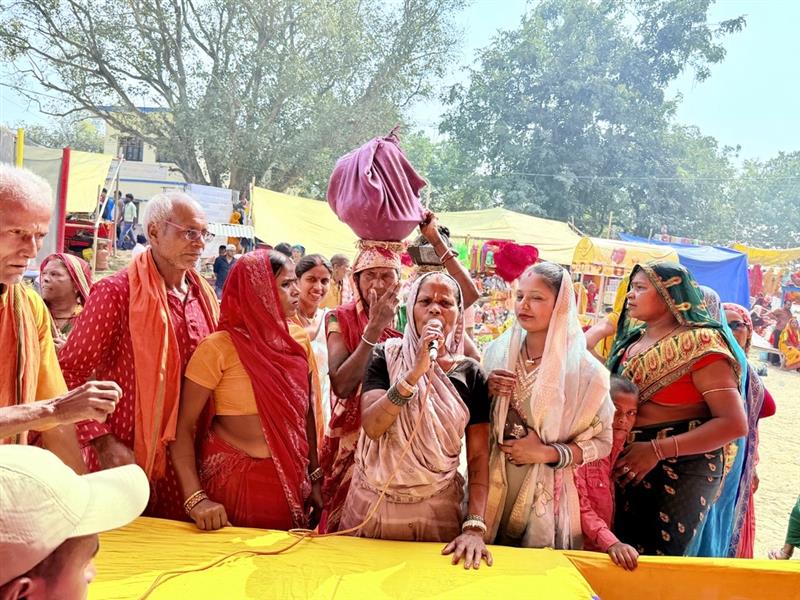
Official data suggest that Nepal is still, in many ways, two countries. Nationally, 20.3 percent of people live below the poverty line, but the rates range from about 12- 13 percent in Bagmati and Gandaki to 26.7 percent in Karnali and 34.2 percent in Sudurpashchim. Multidimensional poverty is 17.4 percent nationally, yet 39.5 percent in Karnali and over 24 percent in Madhesh and Sudurpashchim, compared with only 7 percent in Bagmati.
The development gap shows in human development, too. Bagmati’s HDI stands at 0.661 and Gandaki’s at 0.618, while Madhesh is still at 0.510 and Karnali at 0.538. The average per capita GDP in Bagmati is roughly 2.8 times that of Madhesh. In short, a voter in the Kathmandu Valley lives in a different reality from a farmer in Salyan or a landless laborer in Saptari.
Gender and social disparities cut across these regional divides. Women’s literacy is 69.4 percent against an overall 76.2 percent; only 23.8 percent of houses and land are registered in women’s names, with a plan target of 35 percent by 2028/29. The Plan also acknowledges that Dalits, Madhesi communities, indigenous nationalities and people with disabilities lag across multiple indicators, even when national averages improve.
Against this backdrop, the Sixteenth Plan’s ambition- to cut poverty to 12 percent, lift HDI to 0.65, reduce the Gini coefficient from 0.30 to 0.28 and the Palma ratio from 1.31 to 1.21 by 2028/29- is bold. The updated SDG financing strategy estimates that achieving SDGs will require roughly NPR 3,023 billion a year through 2030, or about 28–30 percent of GDP in annual investment across public and private sectors. Yet the Economic Survey shows revenue stuck at 17.9 percent of GDP, total expenditure at 26.7 percent of GDP, capital execution at just 61.4 percent of allocations, and public debt at about 43 percent of GDP.
In other words, Nepal is being asked to close big gaps with limited fiscal fuel and an already stretched engine.
Six parties, six economic stories
The six major parties tell different stories about how to get from here to there. Their manifestos can be read as competing answers to three questions: who will drive growth, who will bear the costs, and who will be protected first?
A simplified comparison illustrates the contrasts:
| Party | Broad economic model | Growth engine highlighted | Social protection style | Federalism stance | Signature political “hook” |
| NC | Private‑ sector-led, investment-friendly | Production, exports, services | Expansion of social security with some universal tones | Strengthen current federalism and better coordination | “Faceless‑Paperless‑Cashless” governance, universal health language |
| CPN‑ UML | Infrastructure‑ and industry-led growth | Big infrastructure, hydropower, and manufacturing | Allowances and social security expansion, less detailed | Pragmatic federalism, big national projects | Delivery of “national pride” projects |
| CPN | Mixed economy, strong role for state & cooperatives | Local production, agriculture, and public investment | Zero‑hunger, expanded social security, strong quotas | Deepen federalism, resource sharing | Justice-centred, class and caste framing |
| RSP | Lean state, strong governance, entrepreneurship | Digital economy, startups, merit-based jobs | Needs-based, efficiency-oriented | Review federalism for efficiency | Anti-corruption, citizen-first rhetoric |
| JASAPA | Identity‑ and region-centred development | Madhesh and provincial economies | Provincial social programs, targeted schemes | Stronger provinces, more fiscal autonomy | Madhesh justice narrative |
| RPP | Market economy plus traditional values | Private sector, tourism, agriculture (broadly stated) | General promises, less detailed | Revisit/ trim federal structure | Monarchy/ Hindu‑state nostalgia |
All six endorse poverty reduction, more jobs and better services. But they differ in how directly they confront the structural reality that Karnali’s poverty is nearly double the national average, Sudurpashchim’s is the highest, and Madhesh’s HDI and literacy lag sharply behind.
Big promises vs. hard arithmetic
The SDG Costing and Financing Strategy is blunt: meeting SDG-related needs between 2024 and 2030 will require about NPR 21.2 trillion, with the public sector expected to finance around 58 percent of that, and even under a 6 percent growth path, a sizeable financing gap remains- especially in infrastructure, social protection, health, education, and gender equality. At the same time, current expenditure already absorbs around two-thirds of total government spending, leaving limited room for new capital and SDG-oriented investments.
Against that canvas, some manifesto promises to stand out as particularly ambitious:
- NC pairs universal‑style language on health and expanded social security with pledges on employment and infrastructure, but offers little public costing or sequencing against the MTEF envelope.
- UML prioritizes an “infrastructure revolution”, hydropower and transmission lines, echoing Sixteenth Plan targets to raise installed capacity from 2,962 MW to 11,769 MW and per capita consumption from 380 to 700 kWh by 2028/29- but without clarifying how capital execution will be improved beyond the current 61.4 percent.
- RSP anchors its promises in governance and efficiency, arguing that tighter anti-corruption and digitalization could free large resources. The Plan itself estimates that irregularities amount to about 10.9 percent of GDP, with a target to halve this; closing even half that gap would indeed unlock resources equivalent to far more than the annual SDG climate adaptation bill (around NPR 29.4 billion per year).
- CPN speaks of a “zero hunger” campaign and broad social security expansion, aligning with SDG1 and SDG2 rhetoric, but does not indicate how such a program, costing hundreds of billions of rupees annually in comparable global estimates, would be financed within Nepal’s already tight fiscal space.
- JASAPA highlights a Madhesh-focused development package alongside demands for stronger provincial autonomy, implicitly arguing that redistributing resources across provinces is as important as increasing the total pie.
- RPP promises development and discipline but devotes more attention to restructuring the state (reducing the number of provinces) than to specifying how it will meet SDG or Plan targets under any given structure.
In all six cases, flagship commitments would benefit from even approximate costing, a sense of phasing (what gets done in the first three years versus the next five), and clear financing mixes (tax reforms, expenditure reprioritization, borrowing, and partnerships), benchmarked against SDG financing scenarios.
How parties see poverty, inequality, and who gets priority
All parties say they want to reduce poverty and protect vulnerable groups. The differences lie in who they name explicitly, how they measure deprivation and what instruments they prioritize.
Most manifestos refer to Karnali and the far west by name, acknowledging their higher poverty and remoteness, and some identify Madhesh’s low literacy (63.5 percent) and HDI (0.510) as a special concern. However, only a few clearly distinguish between income poverty, multidimensional poverty and income/wealth inequality, or refer to tools like poverty maps and integrated registries that the Plan and SDG strategy treat as central to targeting.
On social protection, parties cluster around three broad approaches:
- Universalist rhetoric with targeted realities– NC and CPN speak of broad entitlements (universal or near‑universal health and social security), often echoing the Plan’s aspiration to raise social protection coverage from 32 to 60 percent of the population by 2028/29.
- Targeted, efficiency-oriented framing– RSP emphasizes needs‑based support and digitized delivery, aligning with SDG advice that in a tight fiscal environment, means‑testing and data‑driven targeting are necessary to avoid unsustainable universal schemes.
- Region‑ and identity-focused schemes– JASAPA and, to some extent, CPN and NC highlight special packages for Madhesh, Karnali, Sudurpashchim or particular caste/ethnic groups, reflecting the Plan’s call for equalization and special grants for lagging regions but not always connecting them to national poverty maps or performance indicators.
Where all parties could go further is in specifying how social protection will transition from fragmented, consumption-oriented schemes to integrated, productive inclusion, as recommended in the SDG strategy. That would mean clearer commitments on using state facility IDs, integrated registries, and graduation-oriented support that couples cash with skills, credit and local job creation.
Governance and corruption: shared anger, different tools
Public frustration with corruption and poor service delivery is one of the few truly cross-partisan issues, and all six parties respond with strong language. The Sixteenth Plan sets measurable 2028/29 targets: improving the rule of law index from 0.52 to 0.80, raising the e‑Governance Development Index from 0.512 to 0.600, lifting voter turnout from 62 to 85 percent, and reducing irregularities from 10.9 percent of GDP to 5 percent.
Manifestos offer overlapping but distinct emphases:
- NC foregrounds a “Faceless‑Paperless‑Cashless” state, e‑procurement, national ID‑based services and party finance transparency.
- CPN‑Maoist Centre stresses transparency laws, public audits and institutional reforms with a justice‑framing.
- UML combines digital governance with heavy investment in ICT and infrastructure, arguing that connectivity itself will reduce rent‑seeking.
- RSP places anti‑corruption at the centre of its brand, promising merit‑based appointments, citizen oversight and strong digital tools.
- JASAPA highlights provincial‑level governance, including provincial courts and anti‑corruption units.
- RPP invokes values and discipline more than specific systems, though it supports modernization in principle.
The positive news is that all six endorse core elements of the Plan’s governance and data agenda- digitalization, open government, better party finance rules- even if they differ on how far to go. The gap is that very few explicitly accept the Plan’s governance indicators as performance benchmarks for the next five years, or spell out which laws and institutions they would reform in their first year in office.
Federalism and balanced development: common diagnosis, contested cures
The Sixteenth Plan is clear that federalism is not just a political arrangement but an economic strategy: strengthening provincial and local economies, clarifying functional assignments and reforming fiscal transfers to favour poorer, more remote areas. Around 24 percent of the federal budget already flows to provinces and local levels, yet internal capacity, planning and monitoring systems remain uneven.
Most parties now accept federalism as the basic framework, but they color it differently. NC, UML, and CPN talk of “making federalism work” by removing overlaps and improving coordination; RSP calls for a review to address inefficiencies; JASAPA demands stronger provincial powers and revenues; RPP proposes reducing provinces or redesigning the structure altogether.
At the same time, nearly all affirm “balanced development”, “special treatment for lagging provinces” and “stronger local governments”, aligning in spirit with the Plan’s directives on equalization, special grants and performance-based transfers. What is usually missing are the technical details that determine whether a poor local government in Mugu or Bajura will actually see more predictable, needs-based, performance-linked funding five years from now.
Where citizens can push for clearer answers
For readers and voters, the manifestos offer both reassurance and reasons to ask harder questions. On the positive side, there is broad convergence on the need to reduce poverty, close regional gaps, strengthen federalism, and fight corruption. On the cautionary side, promises often outpace fiscal reality, and commitments to equity and justice are not always matched by concrete, measurable pathways.
Constructive questions might include:
- On poverty and inequality: How will this party’s flagship program change the distribution of income, assets, and opportunities between Bagmati and Karnali, between Madheshi women and urban men, over the next five years? Which poverty and inequality indicators from the Sixteenth Plan will it commit to publicly tracking every year?
- On fiscal realism: Given that revenue is 17.9 percent of GDP, expenditure 26.7 percent, and SDG needs require around 28–30 percent of GDP in investment, which taxes will the party raise or broaden, which expenditures will it reprioritize, and what ceilings will it set on new borrowing?
- On governance: Will the party adopt the Plan’s governance targets (on corruption, rule of law, e-governance, irregularities) as binding goals, and which specific legal changes- on procurement, audits, party finance- will it pass in its first year?
- On federalism: How will the party reform equalization and special grants so that provinces like Karnali, Madhesh, Lumbini, and Sudurpashchim move visibly closer to national averages in poverty and HDI by 2028/29?
- On finance: How will financial sector reforms and credit policies ensure that cooperatives, microfinance, and banks serve poor households, small farmers, and SMEs, rather than only well‑collateralized borrowers?
If citizens, media, and civil society can put such evidence-based questions at the heart of the campaign, manifestos will be forced to evolve from lists of attractive promises into more honest roadmaps. In a country where a child’s odds of escaping poverty still depend heavily on which province, caste or gender they are born into, the ultimate test of every manifesto is straightforward: does it help close those gaps in a way that is economically realistic, institutionally grounded, and true to the spirit of a constitution that promises dignity, justice and prosperity for all?
A revised, public-facing version of the article in Nepali language was published in Onlinekhabar on February 25, 2026.
Sources:
Ministry of Finance. (2024). Economic Survey 2023/24. Government of Nepal.
National Planning Commission. (2024). The Sixteenth Plan (FY 2024/25–2028/29). Government of Nepal.
National Planning Commission. (2025). Nepal’s Sustainable Development Goals: Needs Assessment, Costing and Financing Strategy – An Update (SDG Costing and Financing Strategy 2025). Government of Nepal.
Communist Party of Nepal (CPN). (2082 BS). Commitment 2082.
Janata Samajbadi Party (JASAPA). (2082 BS). Ghosanapatra 2082.
Rastriya Swatantra Party (RSP). (2082 BS). Vachapatra 2082.
CPN–UML. (2082 BS). Election Manifesto 2082.
Nepali Congress (NC). (2082 BS). Commitment 2082.
Rastriya Prajatantra Party (RPP). (2082 BS). Sankalpa Patra 2082.
Ministry of Finance. (2082 BS). Medium-Term Expenditure Framework (MTEF) 2082. Government of Nepal.
Government of Nepal. (n.d.). Vittiiy Kshetra Vikas Rananeeti [Financial Sector Development Strategy – Nepali version].
Government of Nepal. (2026). Financial Sector Development Strategy (Updated version approved 28 January 2026). Government of Nepal.
[1] This article focuses on six parties- NC, CPN‑UML, CPN, RSP, JASAPA, and RPP- because of their recent roles in forming or leading governments, shaping parliamentary majorities, or emerging as significant national contenders in opinion and electoral trends. They are treated here as a manageable sample of major actors for evidence-based comparison against national frameworks, not as the only meaningful forces in Nepali politics; many other national and regional parties also advance important ideas and deserve similar scrutiny in future work
 Rakesh Karna